Access our latest freight rates, Amazon FBA pricing, and shipping resources to plan your shipments better.

Middle East Shipping Disruptions: What China Exporters Need to Watch in 2026
Regional security, energy-market volatility and carrier surcharges can affect freight costs, sailing schedules, inventory and payment risk.

Industry Insights & Updates | Updated 5 November 2026 | China export and international shipping risk

Many foreign traders scroll past Middle East news and treat it as nothing more than a trending story. The developments described in the original source are more consequential for exporters because they connect regional security, energy infrastructure, shipping routes and commercial risk. The Houthi statements of 24 October 2026 referred to Saudi Arabia’s energy and aviation infrastructure, rather than only merchant vessels on the Red Sea route. However, claims about targets must be distinguished from independently confirmed damage.
For Chinese export categories such as home appliances, auto parts, tools, plastic products and textiles, possible effects can travel through several channels: raw-material costs, ocean freight, delivery schedules, inventory planning and payment collection. This article reviews the reported events, explains the potential transmission chain and sets out practical risk-control measures for exporters.
The analysis below preserves the substance of the supplied article while updating or qualifying figures that could not be verified as originally written. It is an operational overview, not investment, legal, insurance or sanctions advice.

I. Event Review: The 24 October Claims and the Escalation in Saudi Arabia
On 24 October 2026, Yemen’s Houthi movement announced that it had carried out seven military operations using ballistic missiles and drones against locations in Saudi Arabia. Reuters and Anadolu Agency reported the group’s claims. The Saudi-led coalition said it intercepted two ballistic missiles; Saudi authorities did not confirm that all the named targets had been hit. The distinction matters: a claimed target is not proof of a successful strike or facility damage.
The targets named in the Houthi statement included the following locations and infrastructure:
- Aviation nodes: King Khalid International Airport in Riyadh, King Fahd International Airport in Dammam and Najran Airport.
- Military site: Khamis Mushait Air Base.
- Energy facilities: an Aramco facility in Yanbu and the Rabigh refinery.
- Energy infrastructure: pumping stations on Saudi Arabia’s East–West oil pipeline.
The Houthi side described the operation as retaliation for Saudi-led coalition airstrikes on Houthi-controlled areas. Reuters reported that the coalition said it had intercepted two ballistic missiles aimed at Yanbu and Taif, while Saudi Civil Defense reported missile debris in several locations. The available reporting did not establish that every target named by the Houthis was hit. See the Reuters report of 24 October and Anadolu Agency’s report.
The supplied source presents the 24 October operation as part of a sequence of incidents during October. Its timeline is retained below, but the individual details for 6 and 22 October should be treated as source-reported unless separately corroborated. Reuters also reported serious attacks affecting Riyadh and Aramco-related sites on 14 October; see its 14 October coverage.
6 October
The supplied source reports strikes involving the Rabigh refinery and Riyadh’s King Khalid International Airport, with refinery facilities catching fire. Independent corroboration for this exact account was not located in the reviewed sources.
14 October
The supplied source reports attacks on Dhahran Aramco facilities and Riyadh Airport. Reuters separately reported attacks affecting Riyadh airport and Aramco’s headquarters in Dhahran.
22 October
The supplied source reports attacks involving the Riyadh Ministry of Defense building, Dammam’s King Fahd Airport and the Yanbu Aramco facility, and an evacuation at Aramco headquarters. These details require further independent corroboration.
24 October
The Houthis claimed seven operations against airports, energy facilities and military infrastructure. The coalition reported interceptions; Saudi authorities did not confirm that all claimed targets were hit.
The broader change highlighted by the source is the potential interaction between maritime security and onshore energy infrastructure. Earlier Red Sea disruption had already led carriers to reassess use of the Bab el-Mandeb Strait and Suez Canal, with some services rerouting around the Cape of Good Hope. Further threats to oil production, processing or export infrastructure could affect energy-market expectations as well as shipping operations. The actual impact depends on whether facilities or transport links are damaged, how long any disruption lasts and what alternative capacity is available.
Saudi Arabia’s East–West pipeline is strategically important because it can move crude from the kingdom’s eastern production areas toward Red Sea export terminals, providing an alternative to routes through the Strait of Hormuz. The Strait remains a major global energy chokepoint: the IEA estimates that around 25% of world seaborne oil trade transited it in 2025. See the IEA Strait of Hormuz factsheet.

II. Risk Transmission Chain: How Do Energy and Freight Changes Reach Export Orders?
Many sellers feel that the Middle East is far away and that regional conflict has little to do with their business. In practice, crude oil and energy markets influence a range of industrial inputs, while shipping routes, fuel costs, insurance and schedule reliability affect the movement of goods. These factors can feed into four connected areas: product costs, freight, lead times and customer orders or payments.
1. Cost Side: Rising Raw-Material Prices Can Squeeze Product Margins
Crude oil is an important upstream input for plastics, chemical fibres and rubber, while energy prices can also affect metal production and processing. The supplied document refers to China Council for the Promotion of International Trade (CCPIT) monitoring during a March Middle East conflict peak and gives the following month-on-month changes: ABS plastic 40%–50%, polypropylene (PP) 30%, copper 25%–30%, and steel and iron 15%–20%.
The export categories identified in the source as potentially exposed include home appliances, auto parts, power tools, household plastic products, outdoor goods, luggage, textiles and hardware castings. Raw-material prices do not necessarily move at the same time as crude oil. Suppliers may revise quotations later, and manufacturers with fixed-price or long-term orders may face margin pressure if input costs rise before contract prices can be adjusted.
2. Freight Side: Surcharges, Rerouting and Longer Voyages
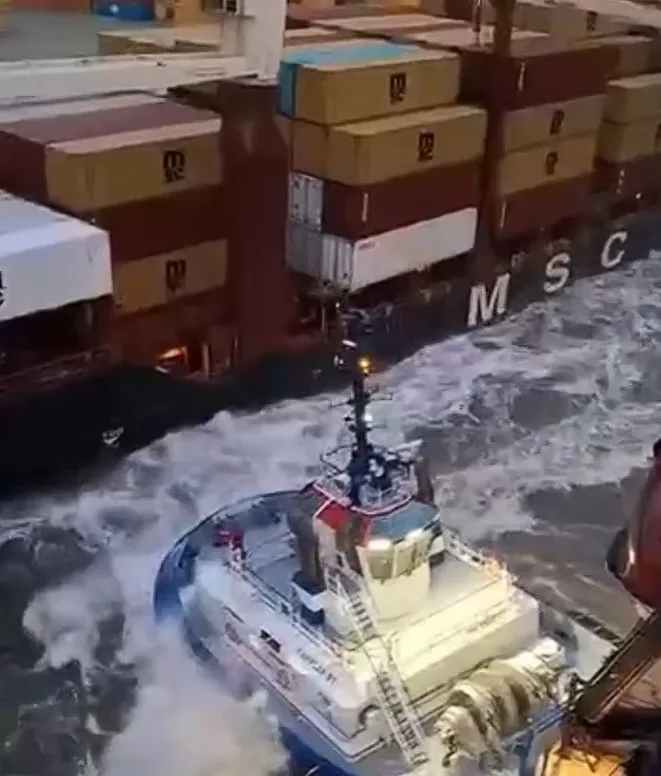
The supplied article states that many carriers have continued to avoid Red Sea risks by routing services around the Cape of Good Hope. The exact routing decision varies by carrier, service, vessel, port pair and current security assessment. UNCTAD’s Review of Maritime Transport 2025 confirms that Red Sea disruption and Cape rerouting have increased voyage distances, delays, operating costs and freight-rate volatility. See UNCTAD’s 2025 review.
The source document compares an original Asia–Europe Suez transit of approximately 24–30 days with a Cape-routed voyage of approximately 38–45 days, adding around 10–14 days. These are indicative figures from the supplied source, not guaranteed transit times or a universal comparison. Actual transit depends on origin and destination ports, service rotation, transshipment, congestion, carrier routing and schedule conditions.
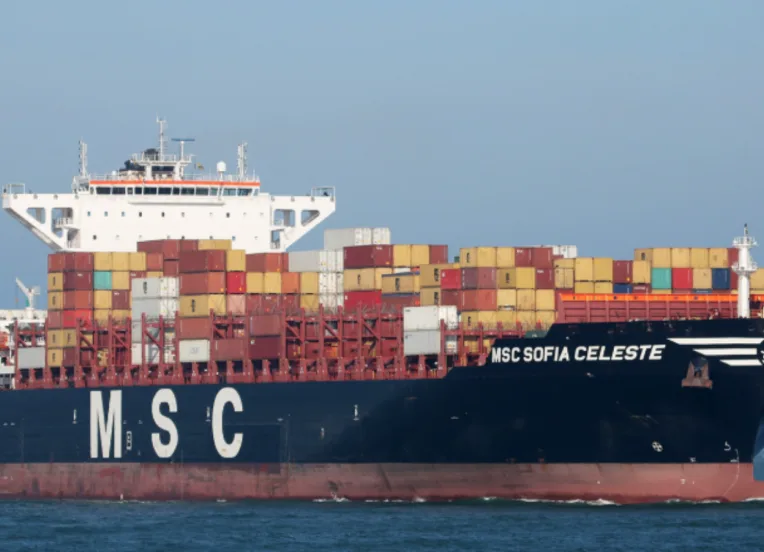
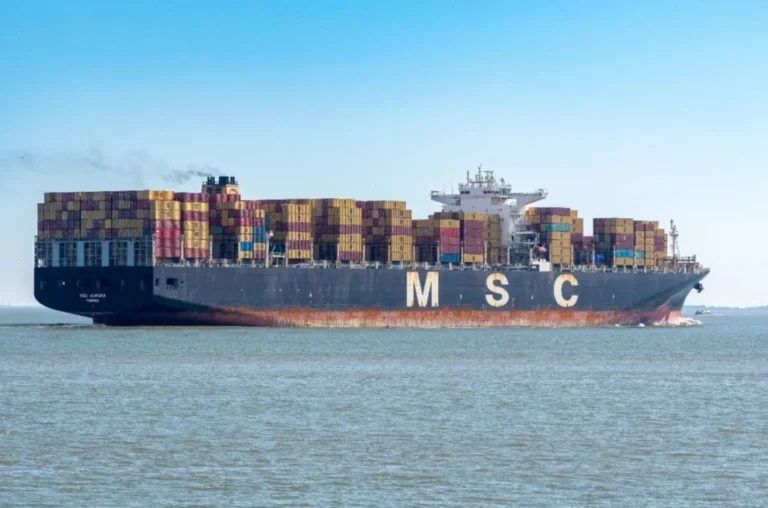
The original also cites a combined MSC Piracy Risk Surcharge (PRS) and Suez Canal Surcharge (SCS) of USD 91 per TEU, comprising USD 55 PRS and USD 36 SCS. MSC’s official customer advisory dated 4 November 2026 confirms these amounts for covered cargo moving from Asia to Mediterranean and Black Sea regions. MSC says the extension to the remaining ports takes effect from 15 November 2026, proforma date, until further notice. The charge is not universal across all carriers, cargoes or Asia–Europe destinations. Check the MSC advisory of 4 November 2026 for scope and applicability.
The source also refers to tightening in the very large crude carrier (VLCC) market, with crude voyages extending from around 23 days to more than 50 days and higher fuel and insurance costs. The document does not identify the route, measurement period or underlying tanker-market data for this comparison. It is therefore retained as a source-reported observation rather than a general benchmark.
The source attributes to CCPIT Zhejiang an outlook that freight rates on Asia–Europe, Middle East and Mediterranean routes could rise sharply if supply concerns persist, alongside higher insurance premiums and war-risk surcharges. This is a conditional market-risk scenario, not a confirmed forecast. Shippers should check the actual carrier notice, route and cargo-specific quotation rather than assume that every lane will experience the same increase.
3. Lead-Time Side: Schedule Changes, Congestion and Delivery Exposure
Longer routings can affect vessel rotation and port-call sequences. Depending on the service and network conditions, shippers may face schedule slippage, rolled bookings, omitted port calls, transshipment changes and port congestion. Potential additional costs include demurrage, detention or container-use charges, port congestion charges and diversion-related fees.
Delivery dates that appeared stable when an order was placed may become less predictable if a vessel is rerouted or a port call changes. Late delivery can lead to customer claims, order cancellations, negative reviews on cross-border e-commerce platforms and other commercial consequences. Exporters should communicate schedule uncertainty early and use shipment-specific updates rather than relying on an old transit estimate.
4. Orders and Payment: Cautious Buyers, Smaller Orders and Collection Risk
The original article argues that geopolitical uncertainty and higher costs can make overseas buyers more cautious. It identifies several possible commercial effects:
- Fewer long-term commitments: buyers may divide orders into shorter-term, smaller or more frequent batches while they wait for clearer market conditions.
- Customer cash-flow pressure: some Middle East customers may request extended payment terms or face tighter working capital.
- Foreign-exchange and regulatory exposure: exchange-rate volatility, sanctions and foreign-exchange controls can complicate payment collection in some markets.
These are risk factors to assess customer by customer, not assumptions about every buyer or country. The source specifically reminds cross-border e-commerce sellers to monitor Amazon and independent-store inventory. Uncertain ocean transit can contribute to stockouts or excess warehouse capacity, while higher first-leg freight costs can compress listing margins. Sellers should revisit replenishment timing, safety stock and pricing assumptions using current shipment information.
III. Four Risk-Control Actions Foreign-Trade Sellers Can Take
The source’s central recommendation is to manage risks before they materialize. Its four practical recommendations cover quotations, freight planning, contract wording and payment collection.
1. Build Buffers into Quotations; Avoid Locking Long-Term Prices
When quoting new orders, allow for potential volatility in oil-linked inputs and ocean-freight surcharges. For long-term orders, consider a price-adjustment mechanism that sets out how both parties will review prices if crude-oil or freight costs move beyond an agreed threshold. This can reduce the risk of fulfilling an order at a loss after material or freight costs rise.
For existing orders, communicate with factories and upstream suppliers to confirm the validity period of raw-material quotations. Record which cost components are fixed, which are subject to adjustment and when a revised quotation may be required.
2. Plan Freight and Routes in Advance; Keep Alternatives Under Review
When calculating landed or export costs, check whether war-risk, piracy-risk, fuel, canal, peak-season or rerouting-related charges apply to the specific carrier service and destination. Do not assume that every surcharge applies to every shipment.
Discuss available routing options with the freight forwarder. A Suez routing and a Cape of Good Hope routing may involve different transit, security, cost and schedule considerations, but neither should be described as universally available or appropriate. Confirm the actual service, current carrier routing, booking space, estimated transit and applicable charges before making a customer commitment.
Reserve space early where practical and tell customers about material schedule changes, additional charges and the possibility of delays. Early, documented communication can reduce later disputes.
3. Review Contract Terms and Delivery-Risk Provisions
The original recommends reviewing export contracts and proforma invoices so they address the possibility that delivery schedules may be affected by geopolitical events, route disruption, vessel diversion or port congestion. Parties may wish to consider appropriate force-majeure, change-in-circumstances, notice, mitigation and delivery-date provisions.
Important legal qualification: A force-majeure clause does not automatically excuse every delay or remove a seller’s liability. The effect depends on the contract wording, governing law, facts, notice requirements and evidence. Have qualified legal counsel review contract language for the relevant transaction and jurisdiction; do not copy a blanket exemption statement without legal review.
Where a contract allows it, agree in advance how schedule changes will be communicated, what evidence is required and how the parties will handle reasonable mitigation or revised delivery arrangements. Keep written records of customer agreement.
4. Tighten Payment Risk Controls and Assess Higher-Risk Customers
For customers in the Middle East, Red Sea region and other markets where a specific transaction presents elevated risk, review credit limits and payment terms. Depending on the customer assessment, exporters may consider higher advance-payment ratios, shorter payment periods or limiting unsecured long-term credit.
Conduct appropriate buyer credit checks before accepting significant orders. The source recommends export credit insurance, including Sinosure, as a possible risk-management tool. Coverage, exclusions, country limits, waiting periods and eligibility must be confirmed directly with the insurer; do not assume that every commercial, war or political risk is covered.
The source also suggests considering RMB settlement and CIPS where commercially and legally appropriate. Payment-currency and channel decisions require bank, compliance and sanctions screening. They do not eliminate foreign-exchange, sanctions or counterparty risk.
IV. Final Summary: Risk Awareness Is Part of Export Competitiveness
The original article concludes that the conflict’s political and security dynamics are complex and that oil and shipping markets may remain volatile. That outlook should be treated as a risk scenario rather than a certainty about how long the situation will continue. Exporters should monitor verified security developments, carrier notices, energy-market information and destination-country customs requirements.
Risks and opportunities can coexist. Businesses that understand how supply-chain disruption may affect input prices, freight, delivery schedules, inventory and payment collection can make better-informed quotations, prepare alternative plans and communicate more clearly with customers. The ability to manage risk is an important part of export competitiveness.
Foreign trade and cross-border business are not only about products and prices. Keep monitoring oil markets, carrier advisories and destination requirements; review assumptions before confirming delivery commitments; and put practical risk management at the centre of shipment planning.
Sources and Further Reading
- Reuters — Houthi claims targeting Saudi oil facilities and airports, 24 October 2026.
- Anadolu Agency — Houthi claims of attacks on Saudi airports and oil facilities, 24 October 2026.
- Reuters — Reporting on attacks affecting Riyadh airport and Aramco facilities, 14 October 2026.
- International Energy Agency — Oil Market Report, October 2026.
- U.S. Energy Information Administration — Short-Term Energy Outlook, 6 October 2026.
- MSC — Piracy Risk and Suez Canal Surcharges, 4 November 2026.
- UN Trade and Development (UNCTAD) — Review of Maritime Transport 2025.
- International Energy Agency — Strait of Hormuz factsheet.
Editorial note: Incident claims and market figures are time-sensitive. Check the linked primary or authoritative sources and current carrier advisories again immediately before publication. The raw-material percentages and certain voyage/tanker comparisons are retained from the supplied document but are not independently substantiated by a directly linked dataset in that document.
Planning a shipment from China?
Share your cargo details, destination, shipment terms and target delivery window with YIDA. Our team can review the available shipping options and provide a shipment-specific quotation, subject to route and service confirmation.
Get in Touch: 📨
📞 Call us: +86-579-85652921
📱 WhatsApp: +86 19857947022 / +86 13715852726
💬 Live Chat: Chat icon at bottom right
🔗 LinkedIn – Follow Us
🔗 Visit Contact Page
✉️ Or email:
- Mark (USA BD): [email protected]
Sunny: [email protected]
📝 Need a Quote Now? Submit via the form below: